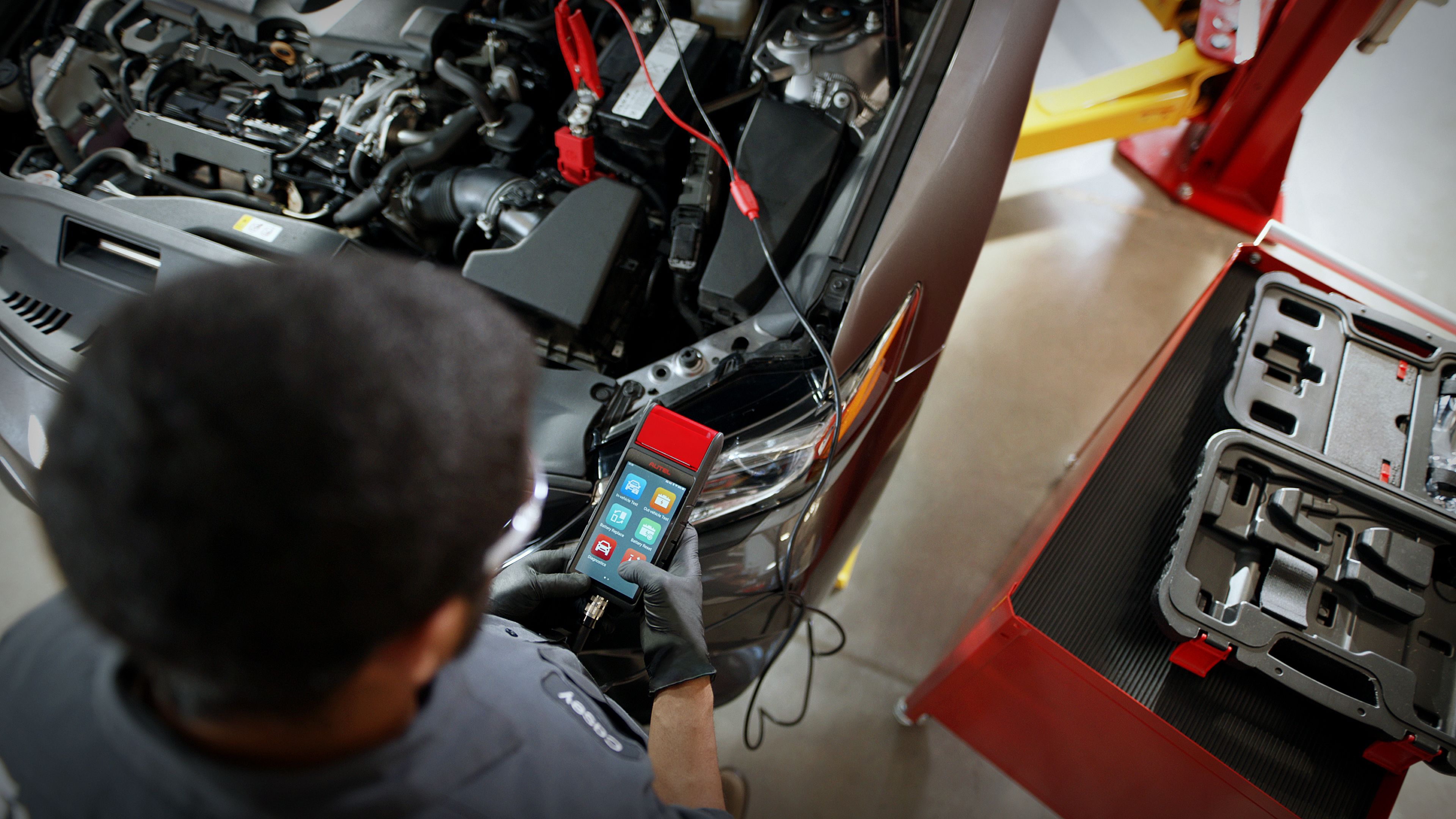
As Ned Stark ominously said, “Winter is coming,” and with it comes plenty of opportunities for your car’s battery to show weakness. Cold weather is unforgiving on a compromised electrical system. So, if you want to avoid early-morning electrical emergencies or commutes that end with you stuck in a parking lot, it’s time to get charged up about battery voltage. Read on to learn what normal vehicle battery voltage should be and what it looks like when your charging system isn’t operating correctly.
What is Voltage, and Why Does It Matter for My Car Battery?
You can think of the voltage of a car battery as an electrical “pressure” that pushes energy through your vehicle’s wiring, giving your starter motor, lights, and accessories the energy they need to function. This energy is measured in volts, and most modern vehicles operate off a 12-volt battery system.
But what does voltage mean in the context of your car battery? Your car battery is a bit like a defibrillator. It jump-starts your car every time you try to start it — providing the power to start your engine and keep essential systems alive. Once your car is running, the alternator takes over (in most cars), keeping everything powered and simultaneously charging your battery.
Maintaining a solid battery voltage is crucial, since it can be a bit like the Goldilocks story; if it’s too low, you may struggle to start your car or experience dimming lights and sluggish electronics (radio, power windows, etc.). If it’s too high, the alternator or voltage regulator might be overcharging, which can damage your battery and other electrical components.
How Many Volts Does a Car Battery Need to Start?
So, how many volts should a car battery have? The normal battery voltage when a car is off should be about 12.2–12.6 volts. This is what we call “resting voltage” for a healthy, fully charged battery. When your engine is running, you can expect about 13.7–14.7 volts, since the alternator kicks in, providing more power than needed to run the system in order to power your performance and recharge the battery at the same time.
However, the minimum voltage to actually start your car can be significantly lower. It doesn’t necessarily need to be 12 volts or higher to start. In fact, some vehicles (depending on their type of battery and starter) can start with as little as 10.5 volts. However, if you drive your car frequently and its battery is only outputting 10.5 volts while driving, something is probably wrong with your charging system or the battery itself. It may start once or twice at that voltage, but something is likely failing.
What Should My Battery Voltage Be While Driving?
When the engine is running, your alternator is in charge (literally). A healthy system should maintain a voltage between about 13.7 and 14.7 volts. This range ensures your battery stays charged without overloading your electrical system. If the voltage hovers at or below 12 volts while driving, your alternator might not be doing its job. If it climbs above 15 volts, your voltage regulator might be malfunctioning, causing your battery to cook from the inside out from overcharging.
Why Is My Battery Voltage Going Up and Down?
If your voltage readings are jumping around, it’s your car’s way of telling you something’s off. Fluctuating voltage can be caused by:
- A weak alternator or a bad voltage regulator providing an inconsistent output
- Corroded battery terminals interrupting current flow
- Electrical loads cycling on and off, such as heated seats or your air conditioner
- A failing or old battery that struggles to hold a charge
If your battery voltage is on the fritz, you may notice symptoms like flickering headlights, dimming dash lights, or your radio resetting. It can be easy to brush these off as minor inconveniences, but don’t ignore them — they’re early warning signs that your charging system may need attention.
Why Is My Battery Voltage High?
A high voltage reading (above 15 volts when the engine is running) usually means that your system is overcharging. Typically, overcharging points to a bad voltage regulator or a failing alternator, which can result in:
- Overheating and swelling of your battery
- Accelerated corrosion inside the battery
- Leaking or evaporating battery acid
- A burnt, acidic smell under the hood
- Failed electrical components
If you notice any of these signs, you should get your charging system checked ASAP. Overcharging can quickly destroy a good battery.
Why Is My Battery Voltage Low?
If your battery consistently reads below 12 volts when the car is off, or never climbs above 13 volts while running, that’s considered low voltage. When your vehicle doesn’t get enough voltage, it may struggle to start or crank slowly. You might also notice that your headlights are dimmer than usual or that electronics cut out or act glitchy.
Fortunately, a low voltage doesn’t necessarily mean you have an issue with your vehicle. If you haven’t driven your car or stored it away for an extended period, you may just need to charge your battery to get things running smoothly again.
However, if you didn’t store your car away for a long time without a battery tender, you’re most likely looking at an issue with your system. Here are the main culprits of undercharging or low volts in a car battery:
A Failing or Weak Battery
Age or sulfation can prevent your car battery from producing enough voltage. If you can’t remember the last time you came in for a battery replacement, or if you let your car battery sit without charging for an extended period, this could be what you’re experiencing.
Loose or Corroded Battery Terminals
When corrosion builds up on your battery terminals, it can cause a phenomenon known as voltage drop, which reduces voltage before it even reaches the system. If the voltage at the battery posts is in the healthy range, but your voltage gauge inside the vehicle reads low, this is the most likely culprit.
Parasitic Drains
If anything draws power when your car is off, such as a stuck relay or a constantly powered interior light, it can slowly discharge your battery while your vehicle sits. If your battery is fully charged when you park, but low when you go to start your car in the morning, this is likely your issue.
An Underpowered or Faulty Alternator
If your alternator is too small or its voltage regulator is bad, it can send too little voltage to the battery, preventing it from fully charging. If you don’t have any of the issues above and find that you have to jumpstart your car frequently, this might be the problem.
How Long Should a Car Battery Last?
Even the best-maintained car battery doesn’t last forever. On average, a car battery lasts between three and five years, though climate, usage, and maintenance habits can stretch or shorten that lifespan. Here’s what can affect the longevity of your battery:
- Extreme Heat: High temperatures accelerate chemical reactions inside batteries, which can corrode internal components and evaporate electrolyte fluid (in non-sealed batteries). In hot climates, batteries might fail closer to the three-year mark.
- Extreme Cold: Frigid temperatures slow the battery’s chemical reactions and can make your engine harder to start, forcing your battery to work harder. A weak battery that might have started fine in summer can fail once temperatures drop below freezing.
- Short Trips: Repeatedly starting your car without giving the alternator enough time to recharge the battery can drain its capacity over time.
- Poor Maintenance: Corroded terminals, loose connections, low electrolyte levels, and deep discharging can all be detrimental to your battery’s lifespan and performance.
How to Maintain a Healthy Battery
Preventive care beats a tow bill every time. Keep your car’s electrical system healthy by following these tips:
- Keep Battery Terminals Clean and Tight: Corrosion kills conductivity and causes voltage drop.
- Test Voltage Regularly: Use a simple multimeter to test your battery’s voltage at its posts. 12.6–12.4 volts at rest and 14.7–13.7 volts when running is ideal. Anything below 12 volts or above 15 volts needs a closer look.
- Avoid Short Trips: On short trips (20 minutes or less), your alternator might not be fully charging the battery during the trip — especially if it’s freezing outside.
- Check for Parasitic Drains: If your battery loses charge overnight, stop by Firestone Complete Auto Care for a parasitic draw test.
- Keep an Eye on Alternator Output: If it’s undercharging or overcharging, it’ll shorten your battery’s life.
- Store Your Vehicle Properly: When possible, park your vehicle in a climate-controlled area. If you won’t be driving your car for a while, use a battery tender to prevent your battery from discharging too deeply and shortening its lifespan.
If your car battery is already on its way out, don’t wait for it to fail when the temperature drops. Learn what to look for in a car battery and visit Firestone Complete Auto Care for all your battery service needs — from testing and charging to complete replacement and professional installation. Our batteries come backed by a warranty that can include 24-hour roadside assistance and reimbursement, giving you peace of mind long after you leave the parking lot.
Have Charging Issues or Need a New Battery? Firestone Complete Auto Care Can Help.
A healthy battery keeps your car running smoothly, so if your voltage is too high, too low, or fluctuating, it’s time for a check-up. Visit your local Firestone Complete Auto Care for a replacement (if needed) and a free battery check to ensure reliable starts and worry-free drives. Schedule an appointment today!