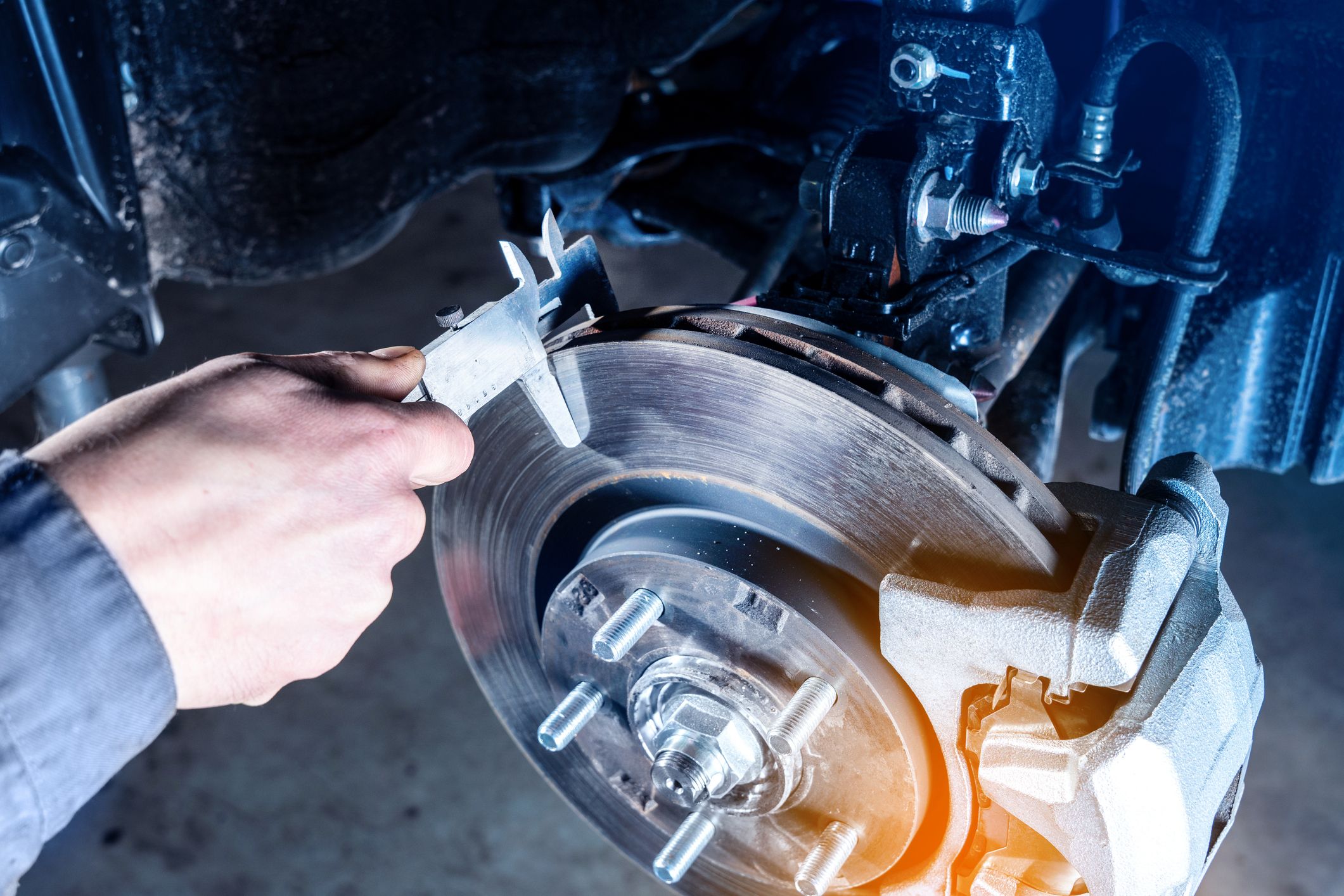
Fingernails on a chalkboard. A train scraping on its tracks. Styrofoam rubbing against styrofoam. Squeaky car brakes. Cringing yet? We are. As far as unpleasant noises go, these guys top the list. While we may not be able to help with the first three, Firestone Complete Auto Care technicians are pros at putting a stop to the splitting and worrisome sound of squealing brakes.
Here's a rundown of what could be causing that racket and how we can help bring the noise to a not-so-screeching halt.
Key Takeaways
- Not all squeaky brakes mean something is wrong. Overnight moisture, brake pad material, dust, or new brake installation can all create temporary noise that goes away on its own.
- Persistent squeaking is a concern. Worn pads, poor lubrication, caliper issues, or glazed rotors can cause ongoing noise and should be inspected before they lead to bigger repairs.
- Ignoring brake noise can lead to increased wear and repair costs. Continuous friction can damage rotors, calipers, and other components that are much more expensive to replace.
- Consider a full brake inspection. Firestone Complete Auto Care technicians inspect pads, rotors, calipers, hardware, and lubrication points to identify the actual cause of the squeak.
- Quiet brakes start with quality parts and proper service. Professional installation, correct lubrication, and the right components help prevent noise and keep your braking system working the way it should.
EXPLORE BRAKE SERVICE AND INSPECTION
What Causes Squeaky Brakes? 9 Possible Reasons
The good news? Not every squeak means something is broken. In many cases, the cause of squeaky brakes is a minor and temporary issue. In others, that sound is your car’s way of asking for help before a small issue turns into a big repair.
1. Brake Pad Material
Not all brake pads are created equal. Some are made with harder materials designed to last longer and perform better under heat. Those materials can squeak more, especially at low speeds or light braking. This is one of the most common causes of squeaky brakes, especially on newer vehicles or after a recent brake service.
2. Worn-Out Brake Pads
This is another common reason brakes squeak. Although the noise can be annoying, it actually serves a purpose. It occurs when a metal wear indicator on the brake pad makes contact with the rotor due to low pad material. When the wear indicator makes contact with the rotor, it produces a squealing sound to alert you that your brake pads need attention or replacement. Since your brake pads aren't something you can easily visually inspect, like your oil or windshield wiper fluid, it's essential to pay attention when they start making noise.
3. Moisture and Humidity
Not all brake noises indicate worn brakes. Rain, snow, humidity, and overnight moisture can also cause your brakes to squeak. This is usually due to condensation collecting on the rotors or inside the drums (if equipped). Once moisture has made contact with your braking components, a thin film of surface rust can accrue. Under such conditions, the brief scraping noise can sound like squeaking or squealing, but it typically disappears once the rotors or drums are clean and warm again.
To help mitigate weather-related squealing, park your car in the garage at night or store it in a climate-controlled area, like an enclosed parking garage.
4. Poor Installation
Low-quality parts and/or improper installation can cause the components to rub together in the wrong places, resulting in a squeaking or squealing noise. One common issue is improperly installed hardware making contact with a rotating part, such as a rotor. This can cause a constant squeak.
To avoid this, make sure to have brake installations and services done by professionals with training, experience, and the know-how to troubleshoot any issues.
5. Debris Between Pads and Rotors
Small rocks, road grit, leaves, or even metal shavings can get trapped between the brake pad and rotor. When that debris gets crushed during braking, it creates a sharp, high-pitched squeal. This is a sneaky but very common cause of squeaky brakes, especially after driving on gravel roads, through construction zones, or in heavy dust.
6. Lack of Lubrication
Another common cause of squeaky brakes is insufficient lubrication, where brake components are designed to move against one another. In disc brake systems, the pads move inside the caliper on a bracket. In drum brakes, the shoes move on the backing plate. Both rely on high-temperature brake grease at specific contact points. When that grease dries out, washes away, or was never applied correctly, metal parts begin to rub against each other instead of glide. That metal-on-metal contact can ultimately create squeaking sounds.
This is a frequent reason drivers notice brakes squeaking when stopping, but the pads are good. The friction material may be fine, but the hardware around it isn’t moving smoothly.
7. New Brakes That Need to Break In
Brand-new brake pads don’t always feel or sound perfect right away. They need time to seat against the rotors or drums. During this “break-in” period, it’s common to hear light squeaks or squeals. After a few days of normal driving, things usually quiet down.
8. Brake Caliper Issues
Brake calipers hold the brake pads in place and use hydraulic pressure to press them against the rotor. They also need to release fully after each stop. To do that, the caliper’s slide pins and internal components must move freely.
If lubrication breaks down or corrosion builds up, the caliper can stick, causing the brake pad to stay in light contact with the rotor or apply pressure unevenly. The result is constant friction, heat, and the squeaking that many drivers hear while driving or braking. Sticking calipers can also lead to uneven pad wear and reduced braking performance, which is why this type of noise should never be ignored.
9. Glazed Rotors or Pads
Heavy braking, frequent downhill driving, or overheating can cause the braking surfaces to become smooth and glossy instead of slightly rough. When that happens, the pad cannot grip the rotor evenly. Instead, it slides and vibrates against the surface, producing squealing and reducing braking efficiency at the same time.
Squeaking Brake FAQs
Are squeaky brakes dangerous?
Not always—but they can be. Persistent or worsening noise should always be checked to help avoid safety risks.
How do I stop my brakes from squeaking?
The first step is to determine what is causing your brakes to squeak. If the brake pads are worn out, replacing them could eliminate the squeaking. If debris is stuck between the rotor and pad, cleaning it out could make a significant difference. Applying a little grease to brake hardware, such as slide pins, can also help lubricate contact points and reduce squeaking. A professional can help determine the cause of the squeaking and recommend necessary repairs.
Can I drive with squeaky brakes?
It depends on what is causing the squeaking. Moisture and heavy use may cause minor squeaking. On the other hand, if the squeaking starts out of nowhere and seems to be getting worse, you should have the brakes checked as soon as possible to help avoid costly damage.
Why do my brakes squeak only at low speeds?
Low-speed braking creates less heat and pressure, which could allow vibrations (and noise) to happen more easily.
Do ceramic brake pads squeak more?
They can, especially when applied cold or lightly, depending on the quality, but they may also produce less dust and last longer.
What can cause brake squeaking when pads are in good condition?
If your brake pads still have plenty of life left, the squeaking is usually coming from another part of the braking system. Common causes include:
- Lack of lubrication at pad contact points, caliper slides, or hardware, which allows metal parts to rub against each other instead of move smoothly
- Debris between the pad and rotor, such as road grit, dust, or small stones
- Moisture or light surface rust on the rotors after rain, washing, or overnight humidity
- New brake pads that are still breaking in and have not yet fully seated against the rotors
- Worn or loose brake hardware, including anti-rattle clips or shims
- Sticking or uneven brake calipers that keep pads in contact with the rotor
A professional brake inspection can identify which of these is causing the noise and recommend the right fix—without replacing parts that don’t need it.
Where is the best brake service near me?
The best place for brake service is one that thoroughly inspects your vehicle and diagnoses your brake issues before making any recommendations.
At Firestone Complete Auto Care, our technicians have experience with all types of brake problems on a wide range of vehicles. Whether you need new brake pads or both pads and rotors, we can complete the brake service and get you back on the road safely.
Pump the Brakes on That Squeak with Firestone Complete Auto Care
When it comes to your car's most important safety feature, don't forget to stop, look, and listen! Periodically lowering your radio's volume can allow you to hear if your brakes may be squeaking. Save your ears and your brakes with a trip to your local Firestone Complete Auto Care.
Our technicians are pros at fixing squeaky brakes (and almost any strange car noise). Bring your car by or make an appointment online for a brake service and inspection before those squeals become deafening or unsafe. Many locations are open late and on the weekends for your convenience.