Before paved highways and daily commutes, driving was unpredictable. Roads were rough, vehicles were experimental, and mechanical reliability wasn’t a given. When Harvey S. Firestone founded the Firestone Tire & Rubber Company in Akron, Ohio, in 1900—with only 12 employees—his focus wasn’t simply on manufacturing rubber products. He believed dependable tires could help turn automobiles from novelties into everyday transportation.
From the earliest tires to today’s complete vehicle care, that vision proved essential as the automobile industry took off.
The Shared Pursuit of Innovation
To fully understand Firestone history, it's important to know that Harvey formed close friendships with Henry Ford, inventor Thomas Edison, and writer John Burroughs. Together, they became part of a well-documented social group known as “The Vagabonds,” who took annual camping trips between 1915 and 1924.
These working friendships among individuals actively shaping modern industry led to numerous industrial, infrastructure, and technological advancements. On some trips, U.S. Presidents Warren G. Harding and Calvin Coolidge were also present. These relationships reflected a shared belief in practical invention and progress.
The Partnership That Accelerated Growth
Firestone’s relationship with Henry Ford became one of the defining partnerships in the early history of Firestone. In 1906, Firestone became the original tire supplier for Henry Ford—as Ford vehicles rolled off assembly lines and into driveways, Firestone tires went with them. Not long after, Firestone tires were standard on the Model T, a vehicle that put millions of Americans behind the wheel for the first time.
This partnership:
- Positioned Firestone at the center of the early automotive boom
- Standardized tire supply during rapid production growth
- Expanded the brand’s national recognition
The collaboration between these two trailblazers gave Firestone national visibility, supported the rise of mass-market automobiles, and cemented its role in early automotive growth. It remains a cornerstone in Firestone history and a turning point in how Americans experienced driving.
Tire Innovations That Made Driving Safer
Our history of reliability didn’t happen overnight. It came from decades of engineering decisions aimed at making vehicles safer, more stable, and more predictable to drive. These tire innovations reflect key moments when Firestone improved traction, durability, and control for drivers everywhere.
- 1908: The First Non-Skid Tread Tire: Firestone introduced the first automobile tire featuring a non-skid tread design. At a time when traction on wet or uneven roads was unpredictable, this advancement improved control and stability.
- 1920: Gum-Dipped Tire Technology: Firestone’s Gum-Dipped tire technology strengthened cord layers by coating them in rubber, helping tires resist heat, flex, and wear. This innovation quickly became an industry standard.
- 1922: The Low-Pressure “Balloon” Tire: The company’s work didn’t stop with passenger cars. Firestone engineers helped develop the low-pressure “balloon” tire, offering a smoother ride, reduced road shock, and longer tread life.
- 1932: Pneumatic Tractor Tire: Firestone introduced the first practical low-pressure pneumatic tractor tire, improving traction, efficiency, and comfort for farmers. While designed for agriculture, the innovation reinforced Firestone’s commitment to mobility and performance wherever wheels touched the ground.
Racing Proved What Engineering Promised
Firestone didn’t just test its technology on public roads; it proved it on the racetrack. In 1911, Firestone tires won the inaugural Indianapolis 500. High-speed endurance under extreme pressure demonstrated durability in ways no advertisement could.
By 1948, Firestone had achieved 25 consecutive Indy 500 victories. Racing pushed Firestone engineers to innovate faster and think differently. Those lessons led to:
- Wide, low-profile tires introduced in the 1960s
- The first steel radial tire with run-flat capability in 1974
- Industry-wide adoption of radial tires by 1983
What worked at high speeds and extreme conditions ultimately made everyday driving safer and more reliable.
From Tires to Total Car Care: The 1926 Turning Point
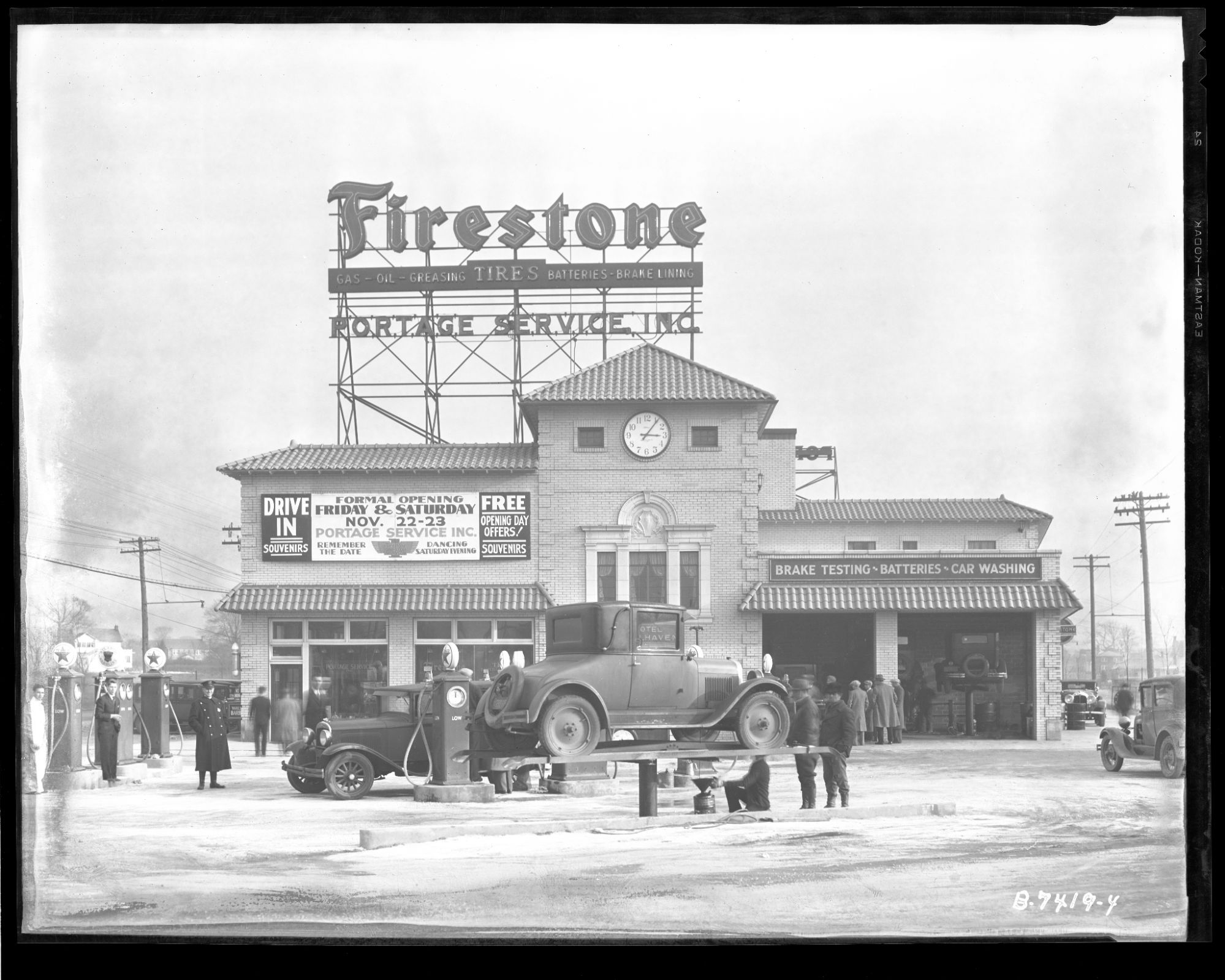
As vehicles became more complex throughout the 20th century, Firestone’s vision soon extended beyond selling tires. In 1926, the company expanded beyond manufacturing into one-stop, complete vehicle care. This act evolved into what drivers now know as Firestone Complete Auto Care, a nationwide network of professional service centers.
Expanding Services for Drivers
- Over the next decade, Firestone continued to build on this customer-first approach by expanding both its service and product offerings. These offerings included:
- Windshield wipers
- Standardized lubrication services
- Dynamic brake testing
- Radios and batteries
- Household appliances (yes, like washers and dryers)
- And even toys
Customer assurances, such as warranty programs and lifetime guarantees, were also introduced. Though not all of these product offerings lasted, the push for convenience and meeting customers’ needs held strong.
Training the Next Generation of Technicians
As more drivers hit American roads, the need for total vehicle care grew. Firestone met this demand by opening specialized training facilities, including tire-repair and battery schools, to develop industry experts.
By the 1930s, thousands of students had been trained in the science of batteries, brakes, and tires. These graduates didn’t just sell products; they also used the latest machinery and proven methods to ensure that every Firestone Complete Auto Care store provided the same high level of modern, one-stop service.
Rapid Service Network Expansion (1930-1974)
As vehicle ownership continued to surge across the United States, Firestone’s service network expanded rapidly to meet demand. Between 1930 and 1974, the business grew from 400 service stations to 1,300 company-owned stores, keeping pace with the growing interconnectedness of North American life.¹
A New Era of Diagnostics (1981)
In 1981, Firestone Complete Auto Care launched a new tier of service, MasterCare, in Phoenix, Arizona.
At the center of the program was the “Mastermind” diagnostic computer, which evaluated vehicle performance in real time and helped technicians identify mechanical issues more quickly and accurately. But MasterCare also included something even more impressive: certified service (for a minimum of 3,000 miles) and price guarantees designed to protect customers from unexpected repair costs. It was an early glimpse of today’s warranties and tire price matching.
Supporting Essential Transportation (2020)
Four decades later, Firestone Complete Auto Care’s commitment to keeping vehicles safely on the road became especially visible during the global COVID-19 pandemic.
During the 2020 lockdowns, Firestone Complete Auto Care was declared an essential business, allowing technicians to continue supporting fleets like DHL and FedEx, as well as first responders who relied on dependable vehicles to serve their communities.
What Firestone Complete Auto Care Delivers Today
Today, as part of the Bridgestone family, Firestone Complete Auto Care moves forward into an exciting new landscape of automotive care. Today’s vehicles are more advanced than Harvey Firestone could have ever imagined. Electronic systems, sensors, advanced drivetrains, and computer-controlled performance mean that keeping a car road-ready requires expertise as much as equipment. With thousands of Automotive Service Excellence (ASE) certified technicians, we’re ready to handle modern enhancements across next-generation gas, advanced electric, and hybrid vehicles.
All of Firestone Complete Auto Care’s 1,800+ locations carry forward Harvey Firestone's commitment to safety, reliability, and innovation, now applied across the entire vehicle. Our expert technicians perform system-wide inspections, diagnose hidden issues, and help drivers understand what their vehicles need before small concerns become costly repairs.
Here’s how that legacy shows up in everyday maintenance:
- Oil changes protect long-term engine performance. Clean, properly lubricated components reduce friction and heat, helping engines run smoothly mile after mile.
- Brake inspections preserve stopping confidence. Reliable braking ensures your vehicle will respond effectively when you need it to, especially in sudden traffic, rain, or unexpected stops.
- Alignment and suspension checks maintain control. When steering feels precise and tires wear evenly, you experience smoother handling, better mileage, and fewer costly tire replacements.
- Battery testing prevents surprise breakdowns. Electrical systems rarely fail at convenient times. Proactive testing helps identify weakening batteries before they leave drivers stranded.
- A/C diagnostics support comfort and system health. Climate control affects more than temperature. Proper airflow helps maintain visibility, defogging performance, and overall cabin safety.
Each of these services reflects the same principle that shaped Firestone from the beginning.
Where early engineers strengthened tire cords to withstand stress, today’s technicians analyze wear patterns, fluids, and system performance to keep vehicles dependable.
Continuing the Legacy
If your vehicle could use a little extra attention—whether it’s an oil change, brake check, alignment, or a full system inspection—our technicians are here to keep Firestone Complete Auto Care’s 100-year legacy going strong.
And if you’re looking for ways to save on your next visit, you’ll find plenty of service coupons designed to make high-quality car care easier on your budget. Schedule an appointment at Firestone Complete Auto Care today and experience the same commitment to reliability that has supported drivers for an entire century.