Firestone Complete Auto Care's Technical Operations Team
The Firestone Complete Auto Care's Technical Operations Team is composed of ASE certified technicians with over 70 years of combined experience. ASE certification represents the highest standard of technical training in the automotive industry. Guided by Firestone Complete Auto Care's rigorous editorial standards, our team delivers timely, detailed, and practical resources drivers can trust to keep their vehicles running newer, longer.
Relatively speaking, there’s nothing complicated about a cabin air filter, but ignoring it will gradually affect your comfort, HVAC performance, and overall driving experience. This is one of those small pieces of routine maintenance that pays off every time you turn on your air condCabin Air Filter Replacement 101 | Firestone Complete Auto Careitioning, especially during hot summer months.
So, if you’re struggling to stay cool or your cabin is starting to smell like a gym locker, keep reading. We’ll explain what a cabin air filter does, why it matters more than most drivers think, and when/how to change it.
Key Takeaways
- Most automotive experts and manufacturers recommend replacing your cabin air filter every 12,000–15,000 miles, but the exact replacement interval depends on your vehicle and typical driving conditions.
- Watch for signs like reduced airflow, odors, dust buildup, and weak air conditioning.
- Most filters are easily accessible behind the glove box or in the engine bay.
- Cabin air filters are directional, so always install the new filter in the correct orientation.
- A clean filter improves air quality, HVAC performance, and comfort.
What is the Cabin Air Filter in a Car?
The cabin air filter is a small but critical part of your vehicle’s ventilation system. It sits between your cabin’s air intake and your interior HVAC systems, cleaning the air before it reaches the cabin. Unlike the engine air filter, which protects your engine, this one protects you.
What Does a Cabin Air Filter Do?
At a basic level, your cabin air filter’s job is to clean the air coming into your car. But practically speaking, it does a bit more than that. A good cabin filter also maintains steady airflow through your HVAC system. Conversely, a clogged cabin air filter can reduce airflow, causing your system to work harder and resulting in weaker performance across the board. Some technicians even theorize that, in certain vehicles, a clogged cabin air filter can negatively affect fuel efficiency.
Where Is the Cabin Air Filter Located in a Car?
In most vehicles, the cabin air filter is easy to access. Common locations include:
- Behind the glove box (most common)
- Under the dashboard
- Under the hood near the windshield
The glove box location is especially common in modern cars. It’s designed for quick access without special tools since this is one maintenance item many owners can handle themselves.
How Often to Replace a Cabin Air Filter in a Car
Vehicle manufacturers typically recommend a scheduled maintenance interval specific to your car. While some makes and models can go longer between replacements, the conservative guideline is to change the vehicle cabin filter every 12,000 to 15,000 miles. And that’s a good place to start, but real life doesn’t always follow a schedule.
If you spend a lot of time in traffic, drive through dusty areas, or experience heavy pollen seasons, your filter is likely to clog faster. The same goes if you’re running your air conditioning constantly in the summer.
Sometimes, the better indicator is what your car is telling you. If you notice any of these symptoms, it’s probably time for a replacement:
- Airflow isn’t as strong as it used to be.
- Your windshield takes longer to defrost/defog than it used to.
- There’s a musty or stale smell when the air is on.
- Dust seems to collect inside the cabin more quickly.
- It feels or sounds like your car is working harder to power its climate control.
Benefits of Replacing Your Cabin Air Filter
Unsurprisingly, the benefits of a fresh cabin filter are the inverse of the symptoms of a clogged one. When you change your cabin air filter, you can expect:
- Better airflow from vents
- Improved HVAC efficiency
- Reduced strain on components
- A cleaner interior environment
- A more comfortable driving experience
How to Replace a Cabin Air Filter in a Car Yourself
If you’ve never done it before, don’t sweat it — replacing your cabin air filter is generally one of the most straightforward DIY maintenance jobs. While the specifics can vary depending on make and model, here’s a general overview of the process:
1. Locate the Filter Housing
Start by locating the cabin air filter in your vehicle. In most cases, it’s behind the glove box, but we recommend consulting your owner’s manual for the exact location and how to access it.
In the case of the glovebox location:
- Open the glove box.
- Remove any limiting tabs or dampers. Some makes and models may require removing a few screws or depressing a lever or two first.
- Let the glove box door drop down fully to expose the housing.
2. Open the Filter Compartment
With the glove box out of the way, you should see a rectangular cover, usually clipped or snapped into place.
- Unclip or slide open the cover.
- Take note of how it’s secured so you can reverse these steps during reinstallation.
3. Remove the Old Filter
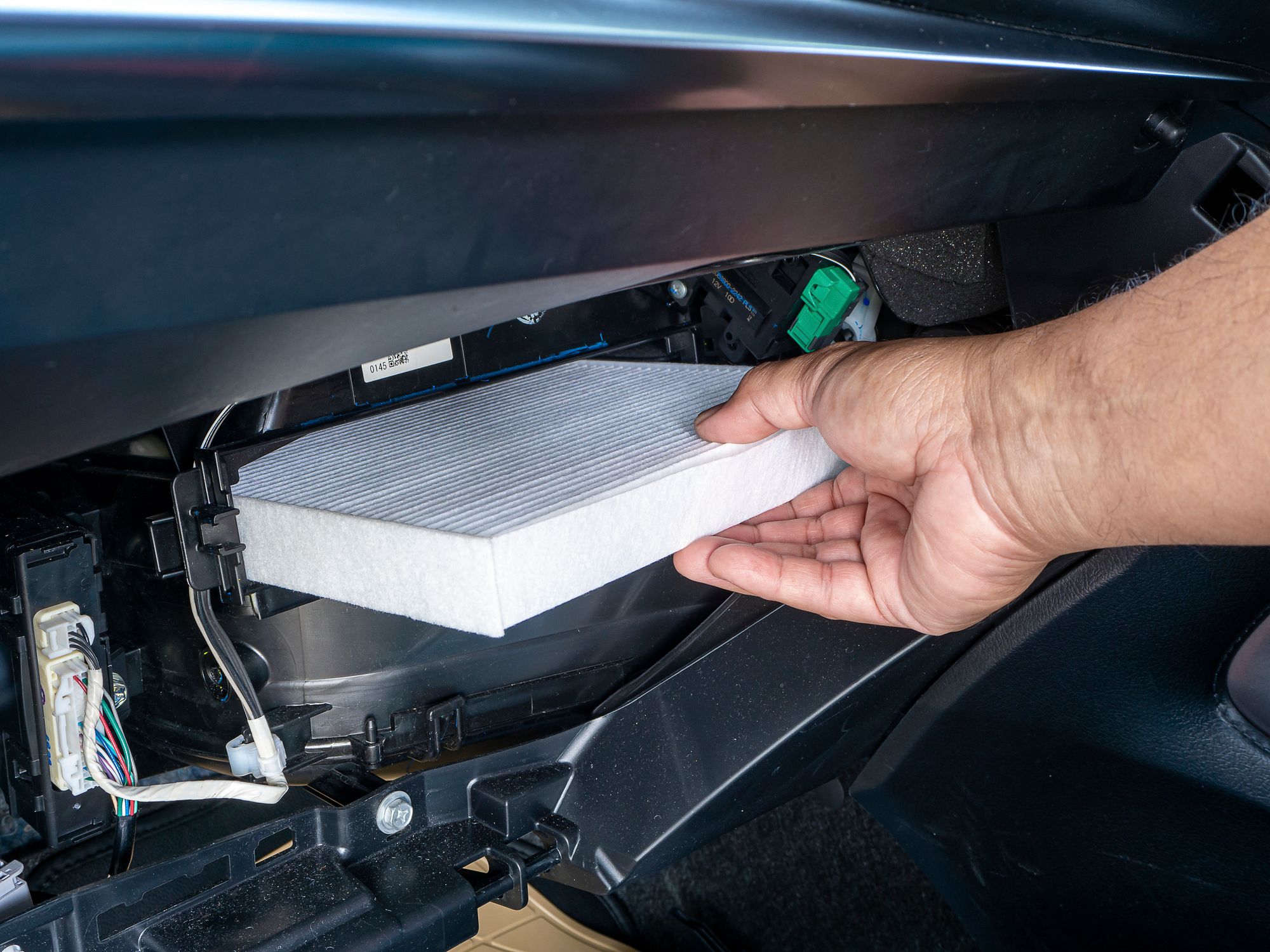
Now that the cover is off, you can carefully slide out the old cabin air filter.
- Expect it to be filled with dust, pollen, and other debris. Proper PPE (eye protection, a mask, and gloves) is encouraged. Avoid shaking it out inside the car.
- Note the filter’s orientation in the housing. There should be an arrow on the filter frame indicating the direction the air is meant to flow through it. Some vehicles also have an arrow or marking inside the filter housing.
- Remove the filter from the housing.
4. Install the New Filter
Before installing the new cabin filter, remove any leftover debris in the filter housing with a vacuum or a damp cloth. Then, install the new filter.
- Gently slide the new filter into place.
- Double-check that the new filter is sitting evenly and fully inside the housing. Ensure that its orientation matches the airflow direction shown on the housing or the old filter. This is critical since installing it backward reduces effectiveness.
5. Reassemble and Rejoice
Now it’s time to return everything to its original position. Simply follow the steps we outlined above in reverse order.
- Replace the filter housing cover.
- Reattach any tabs or dampers.
- Close the glove box.
And that’s it! No special tools. No complicated steps. You can officially pat yourself on the back and enjoy some cool, unrestricted airflow through your new cabin air filter.
Car Cabin Air Filter Replacement Made Easy
You can absolutely handle this yourself, but with Firestone Complete Auto Care, you don’t have to. We offer cabin air filter replacement as part of routine maintenance and HVAC system service. Our technicians can inspect the condition of the filter, install a properly fitted replacement, and evaluate airflow performance to help ensure consistent cabin comfort. Stop by your nearest service center today!
Cabin Air Filter FAQs
Can a dirty cabin air filter affect air conditioning?
Yes. A clogged cabin air filter can restrict airflow through your vehicle’s HVAC system, making your air conditioning feel weaker and less effective. In some cases, reduced airflow may also cause your defroster to work less efficiently and force HVAC components to work harder than necessary.
Is it safe to drive with a dirty cabin air filter?
While a dirty cabin air filter usually won’t prevent your car from running, it can reduce cabin airflow, worsen interior air quality, and strain your HVAC system over time. If left unchanged long enough, it may contribute to poor heating and cooling performance and unpleasant odors inside your vehicle.
Can a cabin air filter help with allergies?
Yes. Cabin air filters help trap pollen, dust, mold spores, and other airborne contaminants before they enter your vehicle’s cabin. Replacing a dirty filter regularly may help improve in-car air quality, especially during allergy season.
Where can I get my cabin air filter replaced?
If your vents smell musty, airflow feels weak, or your A/C isn’t performing as it used to, Firestone Complete Auto Care can help. Our technicians can inspect your cabin air filter, replace clogged filters with properly fitted replacements, and evaluate your HVAC system to help keep clean air flowing through your vehicle.