A long summer road trip asks a lot of your vehicle. High temperatures, hours at highway speeds, a loaded trunk, and maybe a rooftop cargo carrier all stack up, and summer has a way of finding whatever is already worn out. The good news is that most summer breakdowns are preventable if you catch the warning signs early.
This road trip vehicle prep guide walks through essential summer car maintenance tips and when to hand things off to a professional.
Key Takeaways
- Tires, battery health, coolant, oil, brakes, belts, A/C, and wiper blades should all be checked before a long drive.
- A road trip is a good time to sort through required repairs, recommended repairs, and preventative maintenance.
- Some checks, such as tire pressure, fluid levels, and wiper blades, can be done in the driveway. Others call for a trained eye.
- A professional inspection before a long drive helps support reliability, comfort, and fuel efficiency on the road.
Required vs. Recommended vs. Preventive: What’s the Difference?
Before you head in for a road trip car inspection, it helps to know what your technician means when they walk you through the results. Most findings fall into three buckets:
- Required Repairs: Immediate attention is required. Something has already failed or is unsafe to drive on. Think worn-out brake pads, a leaking coolant hose, or a tire with exposed cord. These need to be addressed before you go for your safety.
- Recommended Repairs: Address as soon as possible. A component shows significant wear and is likely to fail soon. Not an emergency today, but not something you want to become an urgent issue 300 miles from home, either.
- Preventative Maintenance: Regular services you have on a schedule. Think oil changes, fluid exchanges, tire rotations, and professional inspections. All of these help reduce the risk of breakdowns in the first place.
Before a road trip is a practical time to address all three. Tackle what has to be done, knock out what should be done soon, and stay ahead of the rest.
What To Check On Your Car Before a Road Trip
The list below walks through the systems that take the biggest strain in summer. Start at the tires and work your way through, making sure to only inspect when your engine is cool. Safety first!
Tires
Any road trip vehicle prep guide should start with the tires. They carry the vehicle's weight, and hot pavement plus long hours at speed is a tough combination. Before a long drive, be sure to check:
- Tire pressure: Match the numbers on the sticker inside your driver's door, not the max pressure printed on the sidewall. If you have a spare, be sure to check it too. (Not sure how to ensure your tire pressure is up to par? Check out our guide: How to Find Your Vehicle's Recommended Tire Pressure)
- Tread depth: The penny test is a classic for good reason: insert a penny into the tread, head first, and if you can see the top of Lincoln's head, it's time for new tires.
- Visual once-over: Check for cracks, bulges, uneven wear, or anything stuck in the rubber.
This is one of the easiest summer vehicle maintenance tips to handle yourself. But if the steering feels off, the car pulls to one side, or the tread is wearing unevenly, it is worth getting your tires and alignment checked by a professional before you go.
Battery
Winter gets most of the blame for battery trouble, but summer heat can be just as hard on battery health. High temperatures accelerate chemical wear in the battery, potentially shortening its life. You can look for obvious corrosion around the terminals, but battery strength is harder to judge without proper testing.
If your engine starts have felt slow or the battery is more than three years old, have it tested before a long trip.
Cooling System
Hot weather and long drives can put serious pressure on the cooling system. If coolant is low or a leak is developing, summer is a fast way to find out the hard way.
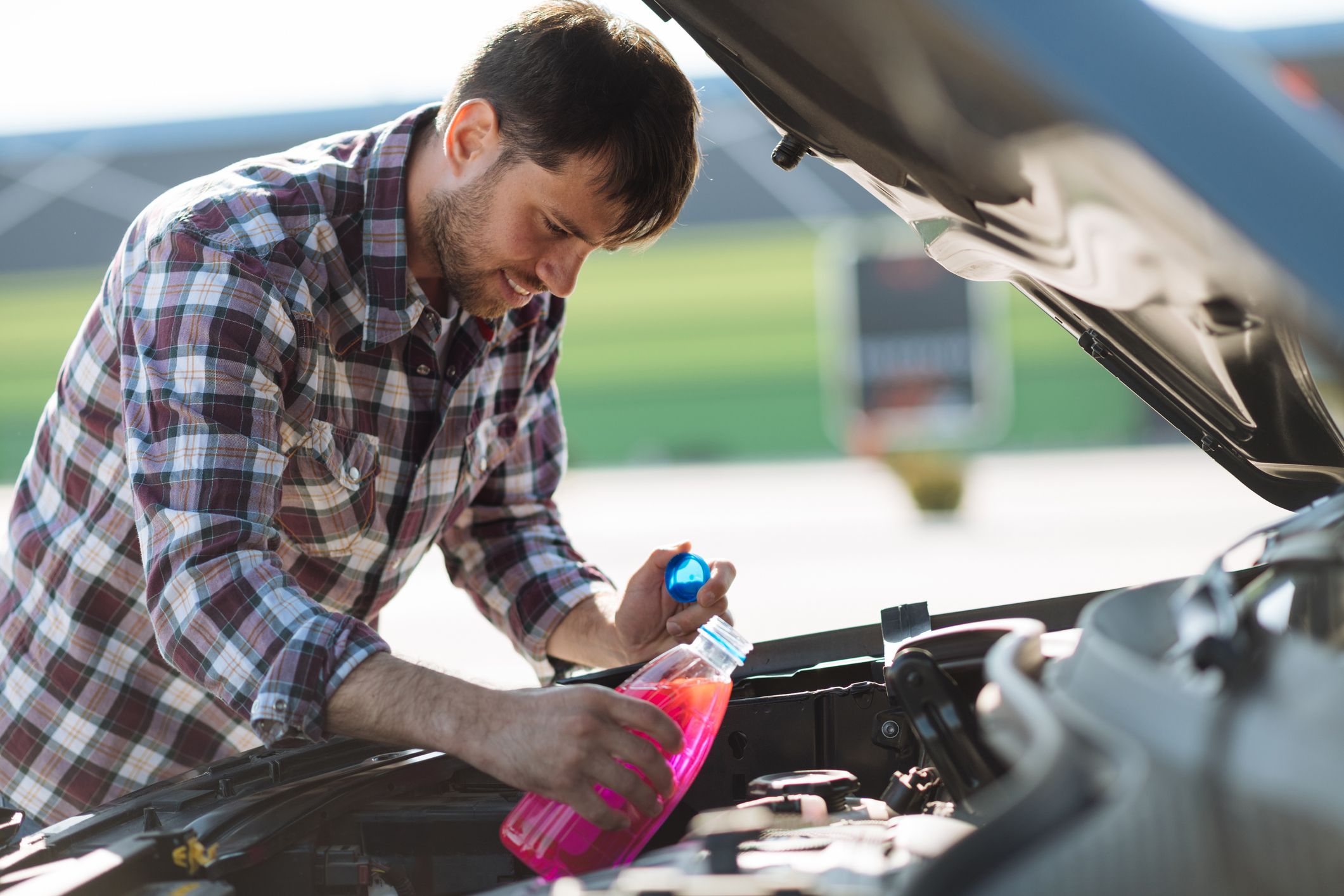
Check the coolant level in the reservoir when the engine is cool and top off if needed. Look for any crusty residue around hoses or the radiator cap; this could be a sign of a leak. If your temperature gauge has been creeping above normal or you have noticed any sign of overheating, do not brush it off.
Engine Oil
Since you’re already under the hood after checking your battery and coolant levels, now is a great time to check your oil level.
With the engine off, pull the dipstick, wipe it clean with a rag or paper towel, insert it completely, then pull it again to ensure an accurate reading. If your oil level is low, give it a top-off using the oil grade specified in your owner’s manual, ideally the same as at your last oil change. If your oil looks gritty or contaminated, or you're due for an oil change soon, get it done before you leave. Fresh oil handles high temperatures better than old oil.
Belts and Hoses
Heat is hard on rubber. Take a look at the serpentine belt, the long belt running across the front or the side of the engine. Cracks across the ribs, glazing, or frayed edges all mean it's due for replacement. While you're there, squeeze your upper and lower radiator hoses. They should feel firm, not mushy or rock-hard, with no bulges or cracks at the clamps.
Timing belts are a different story. They're behind a cover and replaced on a mileage schedule. Check your owner's manual for the interval and have a technician at Firestone Complete Auto Care handle it.
Windshield Wipers and Washer Fluid
Summer weather can change fast. One minute, the road is clear, and the next, you are driving through a hard rainstorm, a swarm of bugs, or a cloud of pollen.
Check your windshield washer fluid level and top off if needed. Inspect your wiper blades for streaking, skipping, or cracked rubber. You’ll be happy you replaced them if needed. A bug-splattered windshield at sunset is a hazard you don’t need. And if you need assistance choosing the right ones for your ride, our guide on "How to Choose the Right Windshield Wipers for Your Vehicle" provides everything you need to know.
Brakes
Brakes matter on every drive, but they matter even more when your vehicle is packed for a trip, the weather is hot, and your route includes heavy traffic, steep grades, or long stretches of highway.
If you hear squealing or grinding, feel vibration, or notice that braking feels soft or less responsive, have your brakes checked before you leave. Even if nothing feels obviously wrong, a brake inspection can still be a smart part of road-trip car maintenance if service is due or if you have any concerns.
Air Conditioning
Your air conditioning is not just about comfort. It aids in window defogging, supports battery cooling in some electric vehicles, and on a summer road trip, it can make a big difference for driver focus.
Test your A/C before your trip. Make sure it blows cold air and keeps the cabin comfortable without struggling. If airflow is weak or the air is not getting cold, it is worth having the system inspected before you leave.
When to Call in a Pro
Plenty of checks on this list are driveway-friendly: tire pressure, fluid levels, wiper condition, and a quick walk-around for anything obviously wrong. These are worth doing, and doing often. But some problems don’t announce themselves. A battery can pass the eye test and still be weeks from failing. Brake pads typically wear on the inside, where you can’t easily see them. A small coolant leak looks like nothing until it doesn’t. A belt that looks fine on the outside can have cracks forming beneath or excessive wear (as indicated by a gauge tool).
Good car maintenance for long road trips means catching these kinds of issues before they catch you, and that’s where a professional vehicle inspection earns its keep. Diagnostic tools and trained eyes spot developing problems before they turn into roadside ones. For a long drive, that peace of mind pays for itself.
A Little Prep Goes a Long Way
The best road trip prep isn’t complicated, and the most important summer vehicle maintenance tips are the most basic ones: check what works hardest in summer, fix what’s unsafe, handle worn parts before they fail, and stay current on routine service. Pack an emergency kit (jumper cables, flashlight, water, basic tools), double-check your destination, and get rolling. A little time to prepare your car for a road trip could save a lot of headaches later.
Long drives and hot weather can place extra stress on tires, batteries, cooling systems, and fluids. Firestone Complete Auto Care offers complete vehicle inspections and preventive maintenance services to help prepare your car for summer travel.
Check out our Offers page to see if there’s a coupon for your required services available near you.
--
Article Development Supported & Reviewed By:
Firestone Complete Auto Care’s Technical Operations Team
The Firestone Complete Auto Care’s Technical Operations Team is composed of ASE certified technicians with over 70 years of combined experience. ASE certification represents the highest standard of technical training in the automotive industry. Guided by Firestone Complete Auto Care’s rigorous editorial standards, our team delivers timely, detailed, and practical resources drivers can trust to keep their vehicles running newer, longer.
--