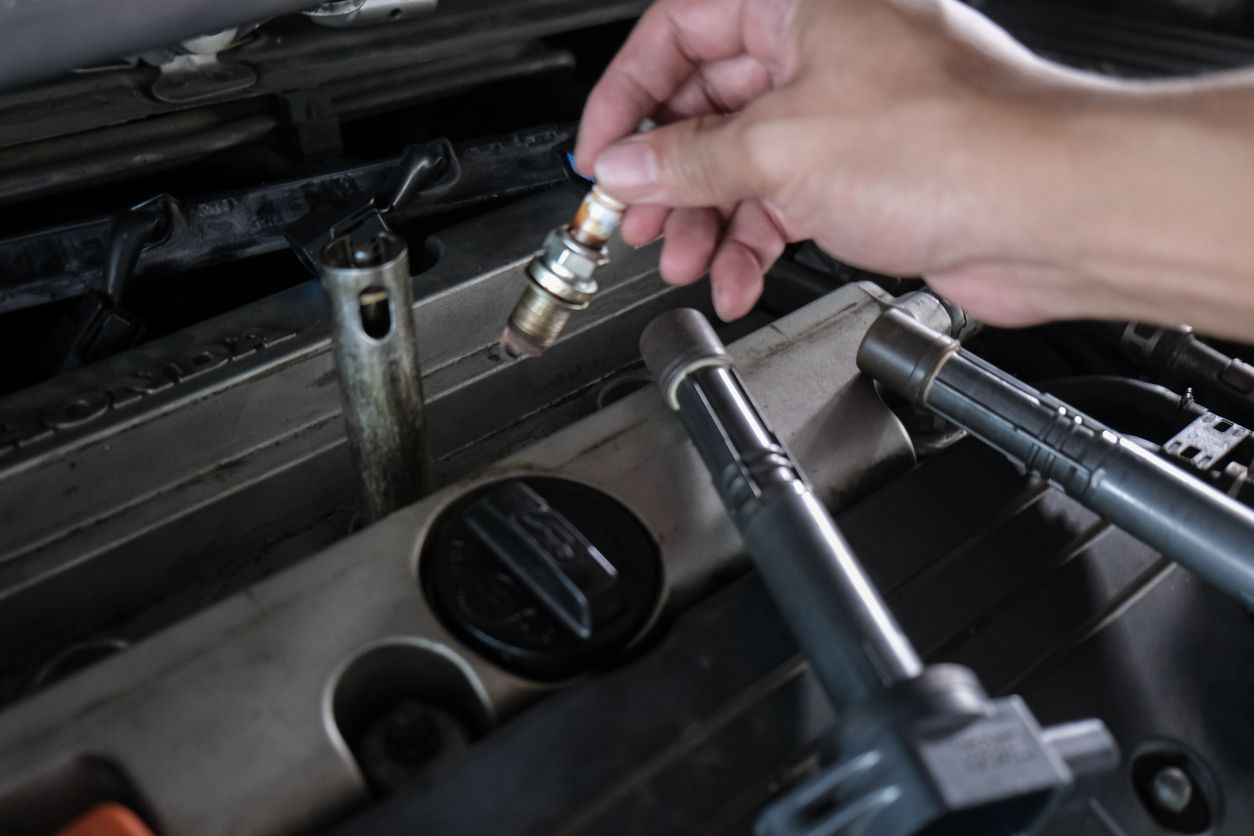
Ignition coils help create the spark that fires up your engine. Without them, you’ll quickly find your car sputtering to a halt, or you won’t be able to start the engine at all. Since they’re directly linked to the performance of your spark plugs and engine, ignition coil failure symptoms will be hard to ignore—and should be repaired promptly!
Keep reading to learn the telltale signs of a faulty ignition coil, what causes these components to fail, and get answers to frequently asked questions, such as how to check an ignition coil under your hood.
Key Takeaways
- Common symptoms of bad ignition coils include an illuminated check engine light, difficulty starting, engine misfires, loud banging or popping from the exhaust, stalling, reduced power, and worse gas mileage.
- A failing ignition coil can cause incomplete combustion, leaving unburned fuel in the exhaust system. Delaying repairs can contribute to costly exhaust and engine damage.
- Ignition coils and spark plugs work together and are usually inspected during the same diagnosis. A worn spark plug can place extra demand on a coil, while a bad coil can cause poor combustion and contribute to spark plug fouling.
- A misfire doesn’t automatically mean the coil is the problem. Worn or fouled spark plugs, wiring problems, incorrect fuel-air mixtures, and other engine issues can produce similar symptoms. A professional inspection from Firestone Complete Auto Care can help you get to the root of the problem.
What Are Ignition Coils?
An engine needs four things to run: air, fuel, compression, and a spark. While that spark comes from your vehicle’s spark plugs, it’s the ignition coils that power each plug, converting your car’s 12-volt battery power into 40,000 volts or more in larger engines. That sudden spike in voltage ignites the air-fuel mixture in your engine, powering your drive.
Most modern vehicles use a coil-on-plug system, where each spark plug has its own ignition coil. Your car’s computer controls when each coil fires, based on input from various sensors. Typically, you’ll have one ignition coil per engine cylinder—so four coils in a four-cylinder engine, six in a six-cylinder, and so on.
How Are Ignition Coils and Spark Plugs Related?
Ignition coils and spark plugs work together during the ignition process. The ignition coils generate the high voltage that spark plugs need to ignite the air-fuel mixture in each of your engine’s cylinders. Because these components work in tandem, a problem with one can sometimes affect the performance or lifespan of the other.
If your ignition coil is bad, it doesn’t usually damage a spark plug in the physical sense, but a weak or inconsistent spark can lead to incomplete combustion, which can create carbon or fuel deposits that foul the plug over time. On the other hand, if your spark plugs are worn out or incorrectly gapped, they may require more voltage to fire, forcing the ignition coil to work harder and potentially wear out faster.
Because ignition coils and spark plugs can cause similar symptoms when they fail, including rough idling, poor acceleration, lowered fuel efficiency, and engine misfires, both are often inspected during diagnoses and engine tune-ups.
Wondering how often to replace your spark plugs? Read our article, “Spark Plug Replacement Guide: Timing, Symptoms, and Next Steps”
What Are the Symptoms of a Failing Ignition Coil?
A failing ignition coil can severely damage your engine and exhaust system. Before things get that far, keep an eye out for these potential ignition coil failure symptoms:
1. Check Engine Light is On
One of the most obvious signs of a faulty ignition coil is an illuminated check engine light. Your car’s computer constantly monitors the ignition system, and if a coil isn’t sending enough voltage to a spark plug, the system will flag it.
At that point, leave it to the pros at Firestone Complete Auto Care to diagnose the check engine light with an OBD-II scanner and get you the ignition coil replacement you need.
2. Difficulty Starting Your Engine
Since ignition coils are responsible for delivering electricity to your spark plugs, it may be difficult to start your engine if a coil fails. In fact, if you have an older vehicle with a single ignition coil, your vehicle may not start at all. In coil-on-plug systems, however, you might experience the jerky or sputtery starts of a “dead” cylinder during startup instead of a full no-start as your engine’s remaining cylinders try to compensate for the loss of power caused by the bad coil.
3. Engine Misfiring
That “dead” cylinder feeling is known as misfiring and may also occur while driving. A misfiring engine will typically run poorly, shake, and vibrate while idling—and jerk or sputter while moving. A bad misfire may even cause your check engine light to flash, indicating a severe issue that needs to be addressed immediately. Misfiring puts incredible strain on engine components, so we recommend bringing your car in as soon as possible if you notice any of these symptoms.
4. Engine Backfiring
If you’re hearing a loud banging or popping sound coming from your vehicle’s exhaust, it could be a faulty ignition coil causing your engine to backfire. As your engine attempts to burn more fuel to make up for the bad coil’s cylinder, some of that fuel may leave the engine prematurely and enter the exhaust system. Backfiring occurs when that unburned fuel detonates in your exhaust system, potentially damaging critical components.
5. Vehicle Stalling
An engine that suddenly dies while idling or driving may have one or more coils intermittently cutting out. This is more common in older ignition systems or coils exposed to high heat.
6. Less Power and Lower Fuel Economy
When spark plugs don’t receive enough electricity from their ignition coil, they may fail to spark or only do so intermittently, resulting in reduced power output from your engine. Your engine tries to make up for this lack of power by consuming more fuel, which reduces gas mileage and can foul spark plugs (which can also damage the catalytic converter). Put it all together, and you get one highly unpleasant driving experience full of stalling, slow acceleration, and rough idling—all thanks to a simple ignition coil failure.
How Long Do Ignition Coils Last and What Causes Them to Fail?
Like any part, ignition coils are subject to wear and tear over time. For many vehicles, it's a good idea to consider replacing the ignition coil around every 80,000-100,000 miles or so. However, maintenance schedules can vary based on your vehicle's make, model year, trim, and driving conditions, so always check your owner’s manual for specifics.
What Causes Ignition Coils to Go Bad? 5 Potential Causes
There are a few circumstances that may lead to premature ignition coil failure, such as:
1. Poor Air-Fuel Mixture Ratio
If the air-fuel mixture isn’t at the correct ratio, your engine is likely to run too lean (too much air) or too rich (too much fuel).
2. Spark Plug Gap Too Big
For spark plugs to operate properly, the space between their electrodes must be gapped correctly. Spark plug gaps naturally widen over time, so it’s important to monitor their health.
Too small of a gap, and the spark generated may be too weak to efficiently combust fuel. Too large of a gap, and the spark may not jump the gap consistently. To bridge a larger gap, ignition coils must deliver more voltage than otherwise necessary, leading to faster wear-out.
3. Valve Cover Leaks
While today’s coil-on-plug (COP) setups deliver stronger and more accurate sparks than single-coil systems of the past, their position under the hood makes them more susceptible to moisture—and it’s no secret that electronics and moisture don’t mix well.
In many COP systems, the coil sits directly above its spark plug, which is housed in a tube in the engine's valve cover. Over time, the rubber seal between the spark plug tube and the valve cover may break down, allowing oil into the tube, shorting the spark from the ignition coils, damaging the rubber where the coil connects to the spark plug, and fouling the spark plugs in the process.
4. Excessive Engine Heat
High temperatures under the hood can cause ignition coils to overheat and degrade faster. Excessive engine heat can stem from various issues, including cooling system problems like low coolant, a stuck thermostat, or a clogged radiator.
5. Electrical Overload or Faulty Wiring
Bad wiring or poor grounds can damage ignition coils. Even a weak battery or malfunctioning alternator can affect coil performance by delivering inconsistent power.
How To Prevent Ignition Coil Failure (Potentially)
Ignition coils are built to last, but like many components under the hood, they can wear out over time—especially when exposed to heat, moisture, or engine misfires. Here are some straightforward tips to potentially help extend their life and avoid unexpected breakdowns:
- Replace Spark Plugs on Schedule: Incorrectly gapped or worn spark plugs force ignition coils to work harder, increasing the risk of failure. Replacing spark plugs at the recommended intervals reduces unnecessary strain on the coils.
- Address Fluid Leaks Promptly: Oil or coolant leaks can seep into ignition coil connectors, causing shorts and corrosion. If you notice any leaks around your engine, have them inspected and repaired promptly to prevent electrical issues.
- Respond to Check Engine Lights Quickly: A flashing or solid check engine light could indicate a misfire or ignition problem. Early diagnosis and repair can protect your coils and your engine from damage caused by unburned fuel or overheating.
- Use Quality Replacement Parts: Opt for trusted brands when replacing spark plugs or ignition coils. Low-quality components may not perform properly and can fail early.
- Schedule Routine Inspections: During regular maintenance, ask your technician to inspect your ignition system. A quick check can uncover signs of wear before they turn into costly repairs.
Bad Ignition Coils FAQs
Can You Drive with a Bad Ignition Coil?
For coil-on-plug ignition systems with multiple ignition coils, it may be possible to drive with a bad coil—but we don’t recommend it. Driving with a faulty ignition coil can lead to engine misfiring, poor fuel efficiency, damage to engine and exhaust components, and a really rough ride.
How Long Can You Drive with a Bad Ignition Coil?
The short answer? Just long enough to get to your nearest Firestone Complete Auto Care for an ignition coil replacement.
In reality, there’s no set time limit to how long your engine will hold out—although the longer you continue to drive with a bad ignition coil, the worse the damage will become.
How Long Do Ignition Coils Last?
Ignition coils typically last upwards of 100,000 miles. Actual mileage will vary based on your vehicle and driving habits, but regular maintenance of ignition system components can help maximize the life of your coils.
How Can You Prevent Ignition Coil Failure?
There’s no single solution to prevent ignition coils from failing. The best course of action is simply to keep up with regular maintenance of your ignition system to minimize wear and tear on your coils.
That means using high-quality OEM replacement parts for coils and spark plugs, ensuring spark plugs are clean and properly gapped, maintaining a healthy air-fuel mixture in your engine, and watching out for valve cover leaks and moisture.
How Do You Check an Ignition Coil?
Checking the condition of your ignition coils is best left to a professional. Faulty ignition coils and spark plugs result in many of the same symptoms, and depending on your vehicle model, accessing the rear coils may require removing the intake manifold.
Furthermore, accurately testing a coil’s voltage requires specialized tools, such as an oscilloscope, and the knowledge to handle high-voltage equipment safely.
How to Fix a Bad Ignition Coil
Fixing a bad ignition coil involves diagnosing which coil has failed, removing it safely, and correctly installing a replacement. And while a quick scan of your car’s computer can usually tell you which coil is faulty, it’s best to leave its replacement to the experienced technicians at Firestone Complete Auto Care to ensure proper installation.
Should I Replace All of My Ignition Coils at Once?
Generally speaking, you only need to replace the faulty ignition coil to get your engine running smoothly again. However, if all your coils are around the same age or close to 100,000 miles, it may be smart to replace them all at once to avoid another trip to the repair shop when the next ignition coil fails.
Keep Your Coils Firing on All Cylinders at Firestone Complete Auto Care
A faulty ignition coil can lead to serious engine damage and discomfort on the road—from stalling and backfiring to engine misfiring. Ensure a safe and smooth transit for you and your passengers when you stop by your local Firestone Complete Auto Care for inspections and Engine Care Services. Schedule an appointment today!
--
Article Development Supported & Reviewed By:
Firestone Complete Auto Care’s Technical Operations Team
The Firestone Complete Auto Care’s Technical Operations Team is composed of ASE certified technicians with over 70 years of combined experience. ASE certification represents the highest standard of technical training in the automotive industry. Guided by Firestone Complete Auto Care’s rigorous editorial standards, our team delivers timely, detailed, and practical resources drivers can trust to keep their vehicles running newer, longer.