Firestone Complete Auto Care's Technical Operations Team
The Firestone Complete Auto Care's Technical Operations Team is composed of ASE certified technicians with over 70 years of combined experience. ASE certification represents the highest standard of technical training in the automotive industry. Guided by Firestone Complete Auto Care's rigorous editorial standards, our team delivers timely, detailed, and practical resources drivers can trust to keep their vehicles running newer, longer.
Key Takeaways
Some of the most common causes of poor fuel economy include:
- Underinflated tires increasing rolling resistance
- Poor wheel alignment creating drag
- Worn spark plugs reducing combustion efficiency
- Faulty oxygen sensors affecting fuel mixture
- Aggressive driving habits increasing fuel consumption
- Clogged fuel filters lowering fuel pressure
Maintaining your vehicle helps improve efficiency, extend component life, and reduce how often you need to fill up.
If you've been watching the numbers climb at the gas pump, you're definitely not alone. Gas prices have a way of fluctuating at the worst possible times, and when your car seems to be drinking fuel faster than usual, that financial sting can hit even harder. So if you've found yourself wondering, "Why is my gas mileage getting worse?" this blog is for you.
Fuel efficiency is a strong indicator of a vehicle's overall health. When your car is running the way it should, every gallon tends to go further. When key components aren’t working properly, your engine works harder, burns more fuel to deliver the same performance, and costs you more money with every mile. The good news is that many causes of poor fuel economy can be addressed through routine maintenance and inspections.
Below, we've broken down 14 common reasons your gas mileage might be getting worse, starting with the ones that tend to have the biggest impact on your wallet. We've also included practical ways to address each one so you can help your vehicle operate more efficiently.
14 Reasons Why Your Car’s Gas Mileage Is Getting Worse
It seems like common sense that, as a car gets older, its gas mileage tends to get worse. In reality, it’s more accurate to say that poorly maintained vehicles are more likely to have worsening gas mileage. In fact, drivers who stick to their manufacturer's suggested maintenance schedule are typically less likely to experience significant dips in fuel economy over the life of their car.
One of the simplest ways to keep gas mileage up is to stay on top of routine maintenance. Still, with so many parts to account for as your car reaches 100,000 or even 200,000 miles, keeping up with fuel-saving maintenance can be tricky.
So, what should you look out for to make sure your car keeps chugging along like the day you bought it? Start by addressing the common problem areas listed below.
1. Your Tire Pressure Is Low
Low-pressure tires are a common cause of worsening MPG because an underinflated tire has increased rolling resistance with the road and a slightly smaller effective diameter. Modern cars come with a tire pressure monitoring system (TPMS) that notifies drivers when their tires need more pressure, but the warning is only triggered after a significant drop in PSI. Running five PSI below the recommended pressure is enough to create drag and lower fuel economy, even if the TPMS doesn’t yet display a warning.
One of the easiest ways to keep your fuel efficiency up is to regularly check your tire pressure and top up as needed.
2. Your Wheels Are Out of Alignment
If you’ve been driving for a while with a steering wheel that doesn’t sit straight, chances are your wheel alignment is costing you money at the pump. Just like with underinflated tires, misaligned wheels create resistance to traveling straight down the road.
Constantly fighting this resistance requires more effort from the engine and hurts fuel economy. Luckily, wheel realignment is a simple fix that can be done at any Firestone Complete Auto Care location near you.
3. Your Engine Is Overdue for an Inspection
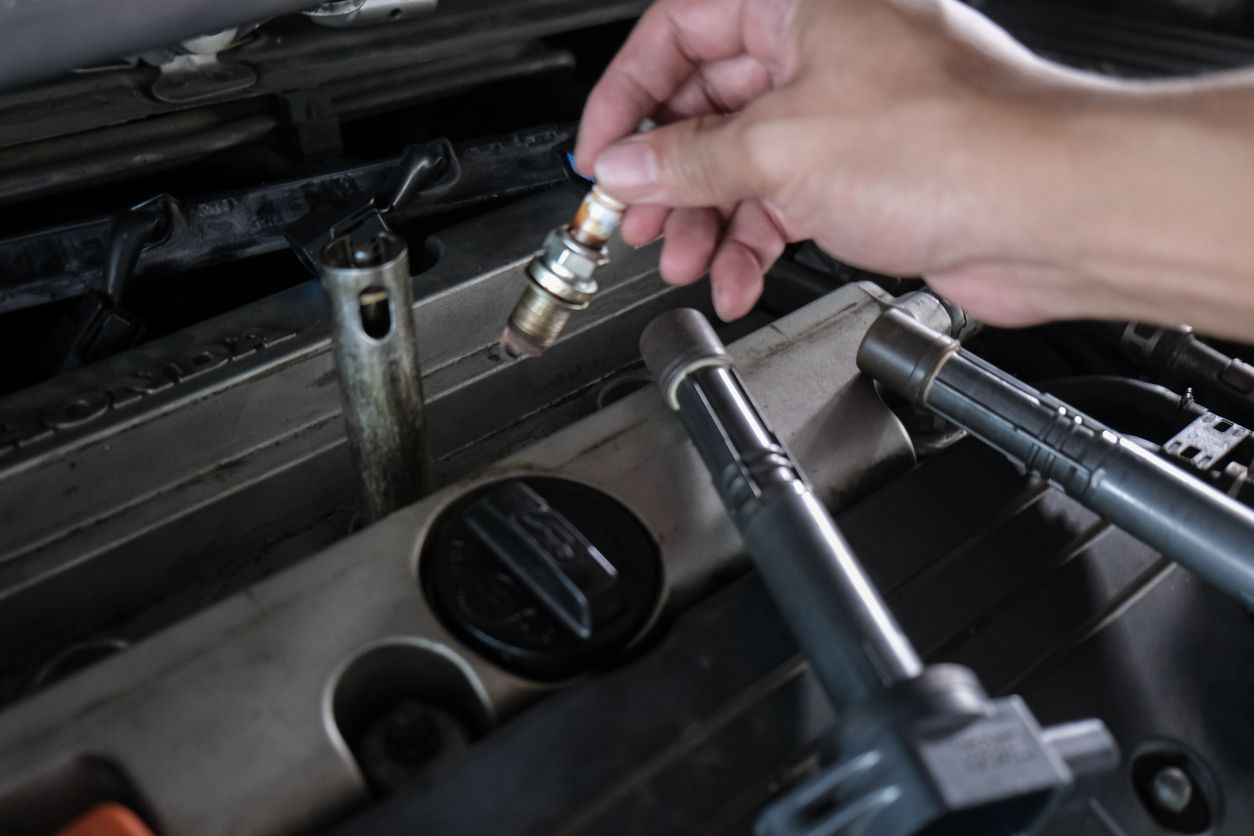
The ignition system includes coils, spark plugs, and wires that ignite the air-fuel mixture in the engine. If any of these parts are malfunctioning, it may be causing the engine to misfire. A misfire occurs when the fuel in an engine cylinder does not combust. Since unburnt fuel cannot power your vehicle, this ends up wasting gas and lowering your fuel economy.
You may experience rough idling, stalling, or a general decrease in engine power if the ignition system is to blame. The most common culprit inside a failing ignition system is the spark plugs.
4. You Have an Old Engine Air Filter
Engines must suck in air to power vehicles. If your engine air filter is particularly dirty or clogged, your engine won’t be able to “breathe.” To compensate, older engines (before the early 1980s) would burn more fuel to maintain the same speed. Newer engines may perform more poorly, trying to compensate for a clogged air filter, but newer engines with clogged air filters won’t decrease your MPG.
This problem is particularly common in older cars that did not yet have oxygen sensors in the exhaust. Engine air filters should be replaced approximately every 15,000 to 30,000 miles, but check your owner’s manual to be sure, or have it inspected at your next oil change.
5. Your Oxygen Sensor is Dirty
An O2 sensor measures how rich or lean the exhaust gases are that exit your engine and sends a message to your car’s computer to adjust how much fuel enters the engine.
A dirty oxygen sensor can lead to incorrect readings, causing your engine to burn too much fuel and lowering efficiency by as much as 40%, according to Edmunds.
Faulty oxygen sensors are among the most common causes of a check engine light and will likely need inspection and possibly replacement before the 100,000-mile mark. Thankfully, O2 sensors are relatively affordable to replace, helping you save on gas and keep your vehicle’s emissions in check.
6. You Have Clogged or Damaged Fuel Injectors
One of the most common culprits for a drop in fuel efficiency is dirty fuel injectors. Fuel injectors are the nozzles that spray fuel into each engine cylinder. A fuel injector’s spray pattern must be very precise to properly mix with air and combust inside the engine.
When a fuel injector becomes dirty or clogged, it may spray fuel inefficiently, like a poorly pressurized shower head. This can quickly reduce your engine's efficiency and fuel economy. In many cases, the fuel injector nozzles can be cleaned. Other times, the injectors may need to be replaced if internal damage is causing a poor spray pattern.
7. You're Driving With a Clogged Fuel Filter
Fuel filters block contaminants in the fuel from traveling throughout the engine, where they could damage fuel injectors and other important parts. A clogged fuel filter can lower fuel pressure and cause your engine to run poorly. In some situations, this can worsen your fuel efficiency.
For older cars, especially, it’s important to change the fuel filter approximately every 2 years or every 30,000 miles unless the interval is specified by the vehicle manufacturer. If you suspect a dirty fuel filter is causing your decreased gas mileage, bring your car to your local Firestone Complete Auto Care for a fuel pressure and flow test.
8. Your Driving Habits Are Working Against You
How you drive has a dramatic effect on how much fuel you use. Aggressive driving — speeding, rapid acceleration, and hard braking — wastes gas. According to the U.S. Department of Energy, aggressive driving can lower your gas mileage by 15–30% on highways and 10–40% in stop-and-go traffic. That's not a small difference.
The most fuel-efficient drivers are smooth and anticipatory. They accelerate gradually, coast toward stops instead of braking hard, and maintain steady speeds on the highway. Using cruise control on long stretches of highway is also one of the easiest ways to keep your speed consistent and improve fuel economy.
Speeding is another major fuel drain. Gas mileage typically decreases rapidly above 50 mph. Slowing down a little can make a noticeable difference in how far a tank of gas takes you.
9. You Have Excess Weight in Your Vehicle
Carrying extra weight forces the engine to use more energy to maintain speed. Heavy cargo, unused roof racks, or unnecessary equipment can all reduce fuel efficiency. Reducing excess weight can help your vehicle operate more efficiently.
10. Your Mass Airflow Sensor Isn't Functioning Properly
Mass airflow sensors measure the amount of air flowing into the engine. Like an oxygen sensor, the mass airflow sensor sends data to the onboard computer to calculate the correct air-to-fuel ratio in the engine, and the computer adjusts fuel injection accordingly.
However, a dirty airflow sensor can cause the car’s computer to miscalculate the proper air-fuel mixture, leading to decreased fuel efficiency or even engine stall. Mass airflow sensors should be very carefully cleaned with a special cleaning spray.
11. You're Driving with Old or Incorrect Engine Oil
There’s a common myth that older cars should use thicker engine oil to prevent leaks. The thinking goes that, since internal seals and gaskets become brittle and shrink with age, thicker oil is less likely to seep through cracks.
Specially formulated “high mileage engine oils” can do this by using seal-conditioning additives to help older seals become more flexible and perform better. In addition, the viscosity is slightly increased to help worn piston rings seal better. However, thicker oil creates greater resistance between engine parts, reducing fuel efficiency.
The right motor oil is essential to keeping modern engines lubricated and protected. The best thing you can do to keep your car’s gas mileage up is to perform regular oil changes with the type of oil specified in your owner’s manual. High-mileage engine oils may help reduce oil leakage and oil consumption, but they might also reduce fuel efficiency.
12. You Have Stuck Brakes
Not only is it dangerous to drive with worn-out brake parts, but sticky brakes can also cause your MPG to plummet. A stuck caliper or sticky brake pads, for example, create resistance to your vehicle’s forward motion. Brake drag means your engine must constantly fight with the brakes just to move, causing fuel efficiency to drop dramatically. Be sure to check your brakes regularly — or simply bring your car into Firestone for a comprehensive brake inspection.
13. Your Piston Rings Are Worn Out
The piston rings in your engine cylinders form a seal against the cylinder walls to create compression. When piston rings wear out, they can’t create a seal, and the engine loses pressure. As a result, fuel efficiency goes out the window.
Engine oil not only helps lubricate the piston rings, but it also contributes to fuel efficiency. The best solution is to ensure your car has regular oil changes with the manufacturer-recommended oil type specified in your owner’s manual.
14. Aging Engine Components
As vehicles accumulate mileage, certain components naturally experience wear or may degrade. Over time, sensors and various moving parts may become less efficient, contributing to gradual declines in MPG. Routine maintenance can help minimize these effects and maintain consistent fuel economy.
FAQ: Why Is My Gas Mileage Getting Worse?
Why is my gas mileage getting worse over time?
Fuel economy may decline as components wear down or maintenance intervals are missed. Issues with tire pressure, filters, sensors, and spark plugs can all reduce efficiency.
Why is my car gas mileage getting worse suddenly?
A sudden drop in MPG may indicate a mechanical issue, such as low tire pressure, clogged injectors, or sensor problems that should be inspected promptly.
Can poor alignment reduce fuel economy?
Yes. Misaligned wheels create resistance, forcing the engine to work harder and increasing fuel consumption. Alignment issues often develop gradually, so drivers may not immediately notice the impact on fuel economy.
Does tire pressure affect gas mileage?
Yes. Tire pressure has a direct impact on fuel efficiency because underinflated tires create more rolling resistance, which forces the engine to work harder and burn more fuel. According to the U.S. Department of Energy, fuel economy can drop about 0.2% for every 1 PSI decrease in average tire pressure.
Even small pressure changes can add up over time, especially if all four tires are underinflated. Keeping tires properly inflated helps your vehicle roll more efficiently and maintain consistent MPG.
Do driving habits impact fuel efficiency?
Yes. Rapid acceleration, high speeds, and stop-and-go driving can significantly reduce fuel economy.
How much can maintenance improve MPG?
Routine maintenance can lead to improvements in fuel economy. Maintaining proper tire pressure alone can improve efficiency, while proper alignment and tire balance can further improve efficiency. Addressing maintenance issues early helps prevent small inefficiencies from becoming more costly over time.
Why does aggressive driving waste gas?
Rapid acceleration, hard braking, and speeding increase engine workload and fuel consumption. Consistent speeds and gradual acceleration allow the engine to operate more efficiently, helping reduce unnecessary fuel use.
How can I improve gas mileage quickly?
Some of the fastest ways to improve fuel efficiency include maintaining proper tire pressure, keeping up with routine maintenance, reducing excess vehicle weight, and driving more smoothly. Addressing simple maintenance items early may also help restore lost efficiency and reduce how often you need to fill up.
Get the Most Out of Your Gas Mileage
Whether your car needs new tires or a new fuel filter, your local Firestone Complete Auto Care technician can get to the bottom of your fuel problems and make things right. Make an appointment today!